






Fences & shared missions make good neighbors
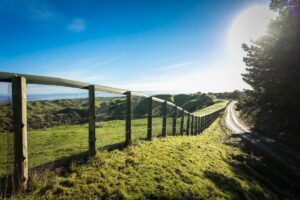
HAWKES BAY, New Zealand — It takes 20 minutes to drive from the entry gate at Cape Kidnappers to the clubhouse. If golfers aren’t staying at the resort’s luxury acccomodations, the Rosewood Cape Kidnappers, they enter the property on the shores of Hawkes Bay before traveling four kilometers — climbing some 200 meters above sea level — before eventually passing through something utterly unique to world-class golf: a predator-proof fence.
It’s the fence, two meters high (and 600mm below ground), that created the Cape Sanctuary, a 2,500-hectare (6,177-acre) preserve founded in 2006.
Today, its grounds are home to one world-top-100 course, perhaps the finest lodgings anywhere in global golf, the planet’s largest gannet colony, and a multitude of New Zealand’s most endangered bird and reptile species.

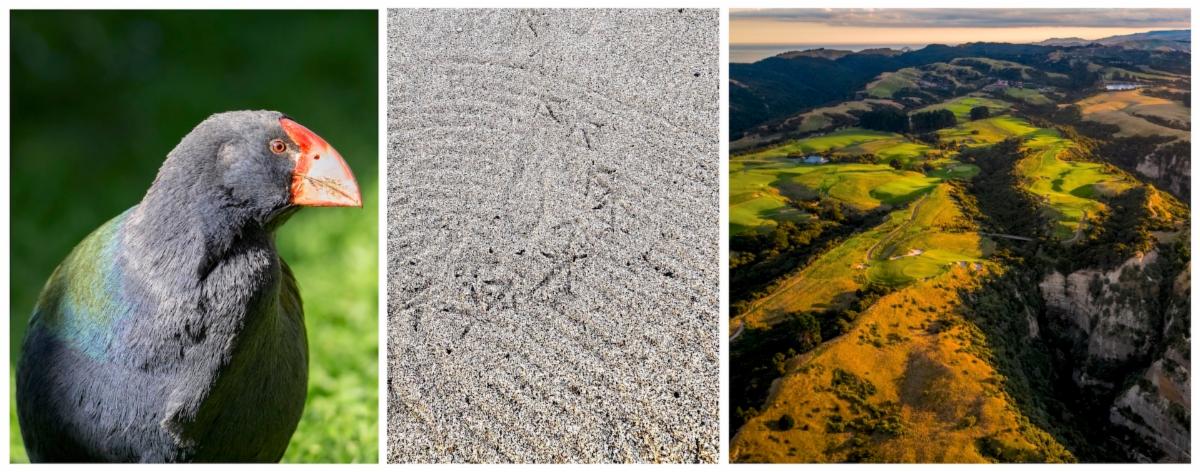
Nor could the takahē, of which only around 550 exist on Earth, safely parade about the clubhouse grounds like big blue chickens — a hotly anticipated Sanctuary development come 2026.
“The takahē are a charismatic, curious and laidback species, which is one of the reasons they are so susceptible to introduced mammalian predators,” says Rachel Ward, who manages the Cape Sanctuary. “They’re not scared of much, which is trouble. It also makes them such a privilege to be around: They are very visible, and the rarest of the rare.”
They say fences make good neighbors, but they also make such wildlife sanctuaries possible. What’s more, the Cape Kidnappers GC is something more than a neighbor. It’s part of and a partner in the Sanctuary effort itself.
“With our nearest neighbor being around 10 kilometers away,” says Cape course superintendent Brad Sim, “we don’t have many (or any) neighbor problems really. But the clear distinction of pest numbers outside the fence to inside, the fence is still by far the best neighbor you could ever have!
“The wildlife seems to love the golf course and we love the sightings. Be it active kiwi wandering around an hour or so before daylight, or the countless tracks we see walking through the bunkers, it’s a blessing to be around them so often. Judging by the increasing sightings year on year, they seem to love being here too. The takahē will be a great addition to the family because they will be more visible to our guests.
“The 20-year anniversary is a great time to reflect, and we’ve been thrilled to be a part of the team effort that has produced such great results across the whole property.”
Savvy golf travelers the world over have likely seen aerial images of the feted Tom Doak design that Sims looks after, with its magnificent chalk-white cliffs rising nearly 500 feet above Hawkes Bay; its elegant fingers of fairway riven by steep, lushly vegetated gullies and canyons. Turns out, that terrain is perfect for the preservation of flightless bird species. Provided there’s proper fencing.
“That is the beautiful thing about the golf course being part of Cape Sanctuary: It really is a brilliant marriage of habitats where the needs of so many species are met,” Ward explains. “The kiwis, for example, love the gullies between holes, which stay wet compared to all other spots in a dry season, as they remain irrigated — though, if you get out there before sunrise, you’ll see kiwi running all over the place.
“Golf courses also tend to have large mature trees and forest corridors, meaning they’re really great for birds perching in the trees and the leaf litter aspect. The aesthetics of the golf course mean native trees and exotic species, gums or macrocarpa: They provide food and nest sites for flighted native birds like kākā. The kanuka and manuka — along with more bush-edge, scrubby trees — are important for bees and kakariki, those striking green parrots with the red crown.
“As long as the area is predator-controlled, golf courses are generally a brilliant place for sanctuary species.”
Nothing about Cape Kidnappers is ordinary. The landform itself extends some 25 kilometers east of Napier and Havelock North, which sit on Hawkes Bay. American financier Julian Robertson acquired the entirety of Cape Kidnappers in the 1990s. He then teamed up with local businessman and landowner Andy Lowe to create the vision for Cape Sanctuary and, in 2006, bring it to life.
In the meantime, Robertson commissioned Doak’s very first overseas design, which debuted in 2004. By the time the lodge opened in 2005, the course was ranked in the world top 50. Doak himself, who gets around, calls the Rosewood Cape Kidnappers “my favorite hotel on earth.” The folks at Conde Nast Traveller are similarly impressed.
To be clear, the golf course and resort lodge are located entirely within the Cape Sanctuary. As is a 2,000-hectare, working cattle and sheep ranch — and the famous gannet colony, located at the tip of Cape Kidnappers.
On the one hand, New Zealand itself seems an unlikely place to find golf resort development and species preservation working together so closely and successfully. NZ boasts some of the most stringent environmental laws in the world. Its government has also spent decades diligently protecting its vulnerable species from predators imported by the 19th century colonists.
But the very need to protect predator-naïve and flightless, endemic species from introduced pest and predator species revealed a partnership made in heaven.
This “mainland island model” was first trialed in 1999ƒmarƒ, with the opening of Zealandia, a non-profit, fully fenced ecosanctuary near the nation’s capital, Wellington. Sanctuaries around New Zealand sprang up based on this very successful model. Once Cape Sanctuary came online — pioneering the idea of golf inside the sanctuary confines — Taupo’s Wairakei International GC followed suit. The predator-proof fence there measures 5.7 kilometers and was completed in 2010. Today the property is known as Wairakei Golf + Sanctuary.
At Cape Kidnappers, the sui generis landform made sanctuary fencing remarkably straightforward: Instead of encircling a protected area, the 10 km fence stretches more or less straight across the peninsula from Hawkes Bay to the Pacific Ocean. This created a far larger sanctuary that includes not just the golf course but the Rosewood, whose guests are eager to partake of sanctuary tours and nature walks.
“We have a permit for 100 takahē but we don’t have that many. Not yet. We need to find more space because the program here is going really well, with lots of breeding and happy, healthy birds,” Ward says. “But it’s important to be clear about this: To make native species thrive, the habitat must be right. We are excited about the new group of birds being set up on the golf course because, as Wairakei have confirmed, they absolutely thrive in a golf course environment.”
Opened in 1970, Wairakei is one of the country’s top courses, but there are no on-site accommodations there. That Cape Kidnappers is home to a world-class resort creates a built-in mechanism that delivers patrons to the Sanctuary.
Ward says that most visitors have a basic understanding of the kiwi being flightless — of how the introduced predators in NZ put them and other species at such great risk. What takes them by surprise? Just how naturally and practically Cape Sanctuary species, including humans, have been sharing the space these past 20 years.
“We humans prefer big open spaces and the birds tend to hang out on the forest edges, so we stick to the golf course itself and that separation works really well,” Ward says. “Evolving with avian predators, our native species are very aware of birds of prey, so they tend to stay close to the fairway edges and down in the gullies, which are damp down the middle with plenty of bugs.
“We’re very excited about upcoming anniversary, as we have so much to celebrate: two decades of hard work beside landowners, businesses and communities; all of us working together to drive conservation efforts that have restored more than 500 hectares of retired farmland. Today we’re in the midst of restoring around 1,000 hectares of remnant coastal forest and dune systems; reducing mammal predators to negligible levels; and restoring endangered species to the landscape that were previously locally extinct.
“That’s extraordinary for just two decades. We have other initiatives planned for next year that will take the Sanctuary to the next level — how’s that for launching the teaser campaign!”


